
Do You Need To Cover A Skip In The Rain?
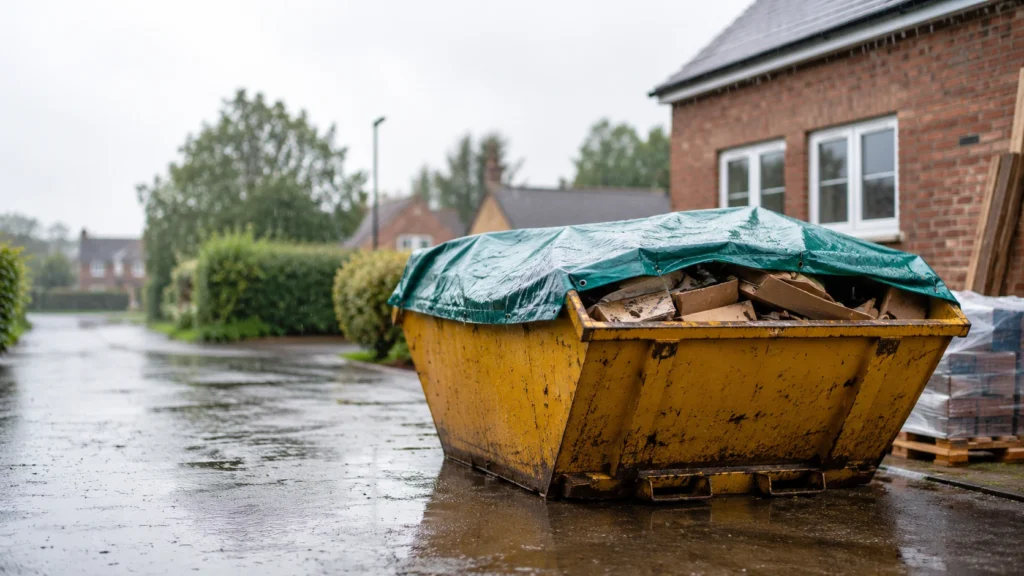
If you have hired a skip and the weather forecast is showing several days of rain, you may wonder whether you need to cover it. In most cases, a skip does not have to be covered simply because it is raining.
Skips are designed to remain outdoors, and a normal amount of rain is unlikely to cause any serious problems. However, the type of waste you are putting inside can make a difference.
Covering a skip can be worthwhile if it contains materials that absorb water, become damaged when wet or could easily blow away in poor weather.
A simple waterproof cover may help keep the contents more manageable, reduce unnecessary additional weight and prevent loose rubbish from escaping into the surrounding area.
Do You Have To Cover A Skip When It Rains?
There is generally no need to rush outside and cover your skip every time it starts raining. Most skips spend their entire hire period outdoors and are built to cope with changing British weather. If the skip contains materials such as bricks, concrete, rubble or other heavy construction waste, rainfall is unlikely to make much practical difference.
There may, however, be situations where covering the skip makes sense. If it is positioned somewhere exposed or contains absorbent or lightweight waste, a cover can offer useful protection.
Your skip hire company may also provide specific guidance depending on what you are disposing of, so it is worth checking their instructions if you are unsure.
What Happens If Rain Gets Into A Skip?
Rainwater can settle between items inside a skip and soak into certain types of waste.
While a small amount of rain is rarely a concern, several days of heavy rainfall can leave materials such as cardboard, timber and soft furnishings considerably wetter and heavier than when they were originally placed inside.
Some materials can also become messy or harder to handle after being soaked. Cardboard may break down, plasterboard can deteriorate and furniture can hold a surprising amount of water.
This does not necessarily mean the skip cannot be collected, but preventing excessive water from entering may make the disposal process simpler.
Can Rainwater Make Your Skip Too Heavy?
Rain can increase the overall weight of a skip, particularly when the contents are capable of absorbing water. Timber, cardboard, soil and general household waste may all retain moisture.
A single shower is unlikely to add much weight, but prolonged periods of heavy rain could make a noticeable difference if the skip is already heavily loaded.
Skip companies have limits on how much weight their vehicles can safely lift and transport. If you are disposing of particularly heavy materials, you should already be careful not to overload the skip.
Keeping absorbent waste covered during extended wet weather may help avoid adding unnecessary weight to the load.
What Types Of Waste Should You Keep Dry?
Some types of waste benefit more from being kept dry than others. Cardboard and paper quickly absorb water and can turn into a heavy, soggy mass after prolonged rain.
Timber can also retain moisture, while furniture, mattresses and other soft furnishings are capable of absorbing significant amounts of water if left exposed.
Plasterboard is another material where you should pay attention to your skip provider’s disposal rules, as many companies require it to be kept separate from general waste.
Lightweight packaging, insulation and similar materials may not absorb much water, but they can become a problem in poor weather because strong winds could lift them out of the skip.
How To Cover A Skip Properly
One of the simplest ways to protect a skip from rain is to use a waterproof tarpaulin or suitable skip cover. Place the cover across the entire opening where possible so that rain cannot easily collect amongst the waste.
You do not necessarily need to create a completely watertight seal. The aim is mainly to prevent the bulk of the rain from falling directly onto the contents.
Make sure the cover is securely fastened and cannot blow away. A loose tarpaulin can quickly become more of a problem than the rain itself during windy conditions.
Avoid attaching anything in a way that could create a trip hazard around the skip, and remember that you will need to remove or fold back the cover whenever you add more waste.
Should You Cover A Skip During Strong Winds?
Strong wind can sometimes be more of a concern than rain, especially when a skip contains lightweight waste.
Pieces of cardboard, plastic packaging, insulation and other loose materials may be lifted out of the skip and scattered across gardens, pavements or neighbouring properties if they are left unsecured.
Covering the skip with a properly secured tarpaulin can help keep these materials contained. It is also sensible to place heavier items above lightweight rubbish where appropriate, provided you are still loading the skip safely.
Taking a few minutes to secure loose waste before bad weather arrives can save you from having to collect it from around the street later.
Can You Leave A Skip Uncovered Overnight?
In most situations, there is no problem with leaving a skip uncovered overnight. Many skips remain uncovered throughout their entire hire period without any issues.
If the forecast is relatively dry and the skip contains heavy materials that are unlikely to move or absorb much water, there may be little benefit in covering it.
If heavy rain or strong winds are expected overnight, covering the skip could still be a sensible precaution.
This is particularly useful when you have cardboard, timber, furniture or loose general waste inside. A secured cover reduces the amount of water entering the skip while also making it less likely that lighter items will escape during the night.
What Should You Do If Your Skip Fills With Water?
If heavy rainfall has resulted in a noticeable amount of water collecting inside your skip, there is usually no need to panic.
Avoid trying to move, tip or alter the skip yourself, as these containers are extremely heavy and should only be handled using the appropriate equipment. You should also avoid making holes in the skip in an attempt to drain the water.
If you are concerned that the additional water has made the skip unusually heavy, contact the company that supplied it.
They can advise whether anything needs to be done before collection. In many cases, a moderate amount of rainwater will not prevent collection, but your provider is best placed to advise if the skip has been exposed to particularly severe weather.
Conclusion
You do not generally need to cover a skip every time it rains. For rubble, bricks and many other forms of heavy waste, ordinary rainfall is unlikely to cause significant problems.
However, prolonged wet weather can add weight to absorbent materials and may make certain types of rubbish more difficult to manage.
Using a secure waterproof cover can be worthwhile when your skip contains cardboard, timber, furniture or lightweight waste, particularly when heavy rain or strong winds are forecast.
If you are uncertain about whether your skip should be covered or how particular materials should be stored, speak to your local skip hire company for advice before collection.